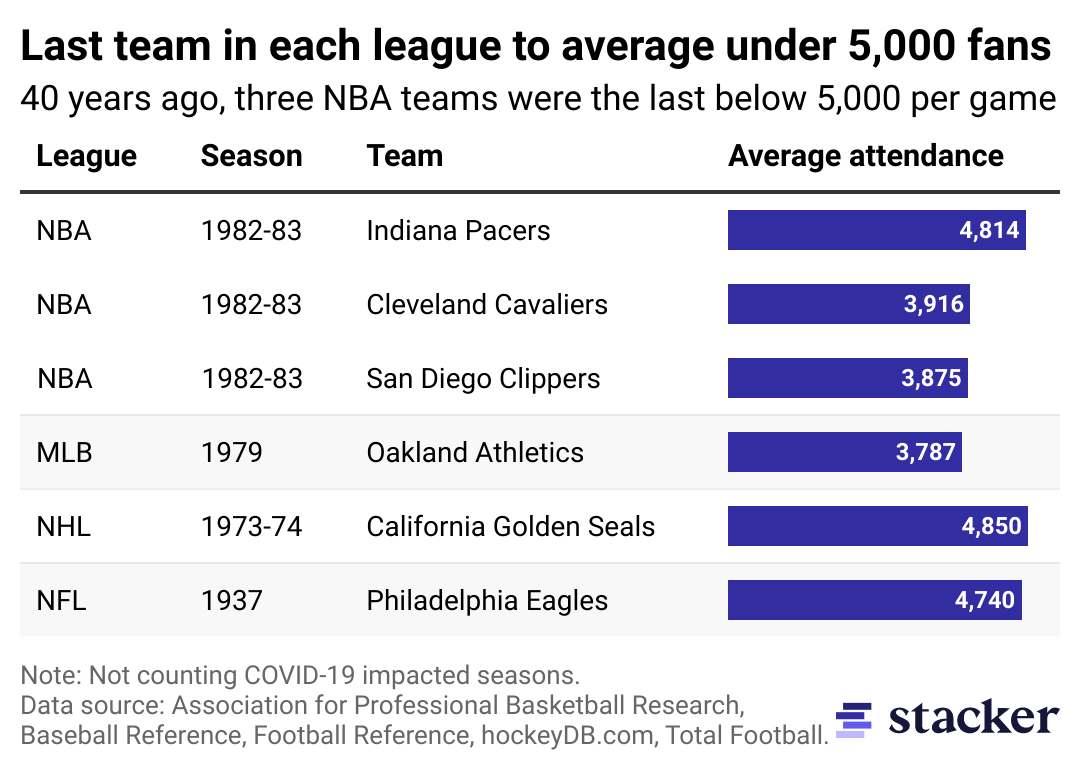
Noah Graham/NHLI via Getty Images If it wasn’t for tardy payments, the Arizona Coyotes might not have needed to move at all. In December 2021, ESPN reported that the Phoenix metropolitan area’s National Hockey League franchise had failed to make $1.3 million worth of tax payments and unpaid venue charges for its home arena, Gila River Arena, which the city of Glendale owns. Frustrated by a track record of unpaid bills, the city chose not to renew its contract with the team. The decision rendered the Coyotes homeless. A second major league arena does exist in the Phoenix area: the Footprint Center, home to the Phoenix Suns of the National Basketball Association. However, the Suns were allegedly lukewarm to sharing space full-time with a hockey team. So the Coyotes had to look elsewhere. The team struck a multiyear deal to play at Mullett Arena, the home barn for Arizona State University’s hockey program. On the surface, Mullett Arena, named so for a long-time university donor, seems potentially enticing. Located on the north end of the Arizona State campus, the $134 million building is brand new. Mullett Arena comes with a catch, however: It only has seats for 5,000 fans. A capacity of 5,000 may be plenty for a college hockey team. But for an NHL team, the size is minuscule. Per a Stacker analysis, the 31 NHL arenas (Mullett Arena aside) hold an average arena capacity of 18,339. The Arizona Coyotes will be playing in an arena a fraction that size this season. In addition, the Coyotes will likely put up historically modest attendance figures with such a small arena. To uncover just how low, Stacker analyzed various statistics related to the Arizona Coyotes’ upcoming season using data from HockeyDB.com and other sports data websites. Our findings lie ahead. Mullett Arena is more than three times smaller than the next largest arena Jared Beilby // Stacker Every major league arena in North America seats at least 15,000 people, except one: Mullett Arena. The new home of the Coyotes seats just a third of that baseline, making it the smallest arena in professional sports. Only one other, Canada Life Center in Winnipeg, Manitoba, Canada, seats fewer than 16,000 people. For additional comparison, Arizona’s old arena, Gila River Arena, sat 17,125 people in its NHL configuration. The club moving into Mullett Arena equals a downsize of nearly 71%. An NHL team has averaged fewer than 5,000 fans in a season only three times since the 1967 expansion Jared Beilby // Stacker Thanks to Mullett Arena’s maximum capacity of 5,000, the Coyotes will join a dubious echelon near the bottom of the lowest attendance totals in NHL history. Since the 1967 expansion, a franchise averaged under 5,000 fans per game just three times–all achieved by the short-lived Seals franchise that played at the Oakland-Alameda County Coliseum Arena before moving to Cleveland and folding in 1978 after one season as the Barons. The Seals/Barons franchise is the only NHL franchise since 1967 to average below 6,000 fans per game for a season, having done so six times in its 10-year lifespan. Barring unforeseen circumstances, Arizona will become the second franchise with a sub-6,000 per game average this season. It’s not just the NHL average–the Coyotes will draw crowds well below their franchise norm, too
The NHL’s Coyotes are going to have historic attendance lows this season–here’s how bad it will be
Oct 4, 2022 | 7:35 PM