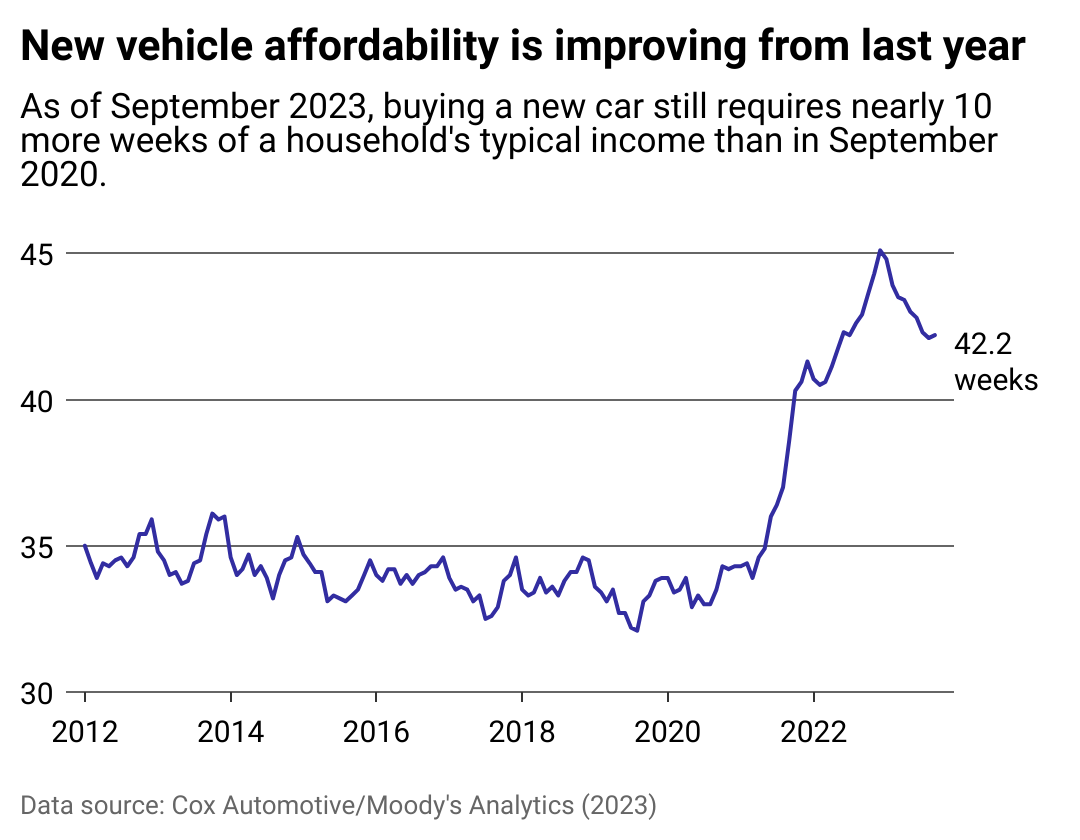
Nattakorn_Maneerat // Shutterstock Buying a new vehicle has become much more expensive since the COVID-19 pandemic threw a wrench into automotive manufacturers’ supply chains. New vehicle prices have been rising at the fastest clip in recorded history since the spring of 2021. That rapid rise in costs began to slow, finally, this year. But that doesn’t mean buying a new vehicle is getting cheaper–it’s just not getting more expensive as quickly as it has been for the last several years. The General used data from Cox Automotive and Moody’s Analytics to examine new vehicle affordability for American consumers. The index considers actual sale prices after any discounts or negotiations rather than simply the MSRP. It also factors in a 10% down payment plus interest and assumes a 72-month term for financing. From 2012-2019, an American household earning the median income could purchase a new vehicle with the equivalent of about eight months of income. Today, buying a new car requires closer to 9.5 months’ worth of income. This represents a shift that’s happened in just three years whereby new vehicles have moved further out of reach for the typical American family thanks to a combination of rising prices for vehicles and higher costs to borrow money. The cost of purchasing a new vehicle relative to income is falling from a decade high
New vehicle costs are tempering but remain high relative to income
Dec 6, 2023 | 10:00 AM