JEROME DELAY // Getty Images No former president of the United States has ever been indicted for criminal conduct–not because there was a virtue-driven absence of any wrongdoing spanning 45 presidencies, but because a certain degree of impunity keeps the executive branch focused on its constitutional responsibilities. Equally as important, it prevents criminal indictment from being used as a political weapon. But with ongoing investigations into efforts to overturn the 2020 election, the Jan. 6 Capitol riot, and the discovery of more than a dozen boxes of White House records at former President Donald Trump’s Mar-a-Lago residence, that could change. For his alleged involvement in these incidents, Trump could be charged with obstructing an official proceeding of Congress, defrauding the United States, and/or seditious conspiracy. The constitution’s language neither explicitly permits nor prevents the indictment of a sitting president. Without a legal precedent established by a Supreme Court’s interpretation of this language, it remains a matter of discretion, according to the U.S. Department of Justice. An internal DOJ memo written in 1973 and subsequently reviewed and upheld by the Office of Legal Counsel stated that an indictment, and all that comes with it, would undermine the executive branch’s ability to do its job. Therefore, the department’s official position has been that sitting presidents are immune from prosecution. Post-term prosecutions, however, are more straightforward. And still, no former president has been convicted. Gerald Ford granted Richard Nixon a full unconditional pardon for his role in the Watergate scandal, preventing Congress from pursuing charges of obstruction of justice. Although the House of Representatives impeached Bill Clinton for lying under oath and obstructing justice, the Senate ultimately acquitted him. Democracies around the world have recently been cracking down on the corruption of past presidents in an effort to hold them accountable for their actions. And while this may be among the purest forms of protecting democratic ideals and values, it has the potential to cause more problems than it alleviates. In young democracies, such prosecution can lead to political division and instability. In the ultimate political quandary for new and old democracies alike, letting a corrupt leader walk free is sometimes for the greater good if it allows democracy to gain a foothold. Stacker referenced news coverage and legal documents to compile a list of former leaders who were prosecuted after leaving office. Read on to learn about them, the crimes they were charged with, and the consequences of those crimes. You may also like: 25 facts about Mexican history and culture. Jeanine Áñez, Bolivia (2021) AIZAR RALDES // Getty Images Jeanine Áñez became Bolivia’s interim president during the country’s political crisis in 2019. Leading up to that year’s general election, Bolivia’s Supreme Court eliminated term limits for public officials. As a result, incumbent presidential candidate Evo Morales ran for a fourth term as president and won. When evidence of election fraud surfaced, suggesting Morales rigged the vote in his favor, a slew of top-ranking government officials resigned, including Morales himself. Áñez, who was president of the Senate at the time, assumed the presidency as the next in succession. With protests raging throughout Bolivia in the wake of political turmoil, Áñez signed a decree giving impunity to armed forces tasked with regaining order as long as their actions were necessary or in self-defense. Dozens of mostly working-class and Indigenous civilians died in the clashes. In 2021, Áñez was arrested and charged with leading a coup against Morales in 2019. In June 2022, she was found guilty and sentenced to 10 years in prison. Áñez is facing additional charges related to sedition and genocide. Benjamin Netanyahu, Israel (2019) YONATAN SINDEL // Getty Images Benjamin Netanyahu served as Israel’s prime minister from 1996 to 1999 and again from 2009 to 2021 after a brief retirement from politics. In 2019, Israel’s attorney general recommended that Netanyahu be indicted on charges of fraud, bribery, and breach of trust outlined across three cases known as cases 1000, 2000, and 4000. He was officially indicted in 2019. Case 1000 includes allegations of the Netanyahu family receiving gifts in exchange for political favors for wealthy allies. Case 2000 alleges that Netanyahu benefited from a proposed deal with Arnon Mozes, owner of Israel’s largest newspaper. The deal involved Netanyahu passing legislation to weaken Mozes’ competitors in exchange for positive coverage of the prime minister. Case 4000, the most serious of them all, accuses Netanyahu of using his position as communications minister to promote the business interests of Shaul Elovitch, controlling shareholder of Israel’s largest telecommunications company. In return, Netanyahu gained editorial control over Walla, a news site owned by Elovitch. The trial began in May 2020 but suffered COVID-19-related delays and is presently ongoing. Netanyahu pleaded not guilty to all charges in February 2021. The former prime minister has also made clear he intends to return to power in the upcoming November 2022 election–which comes after the sitting government under Naftali Bennett collapsed, forcing the appointment of an interim prime minister. Mohamed Ould Abdel Aziz, Mauritania (2021)
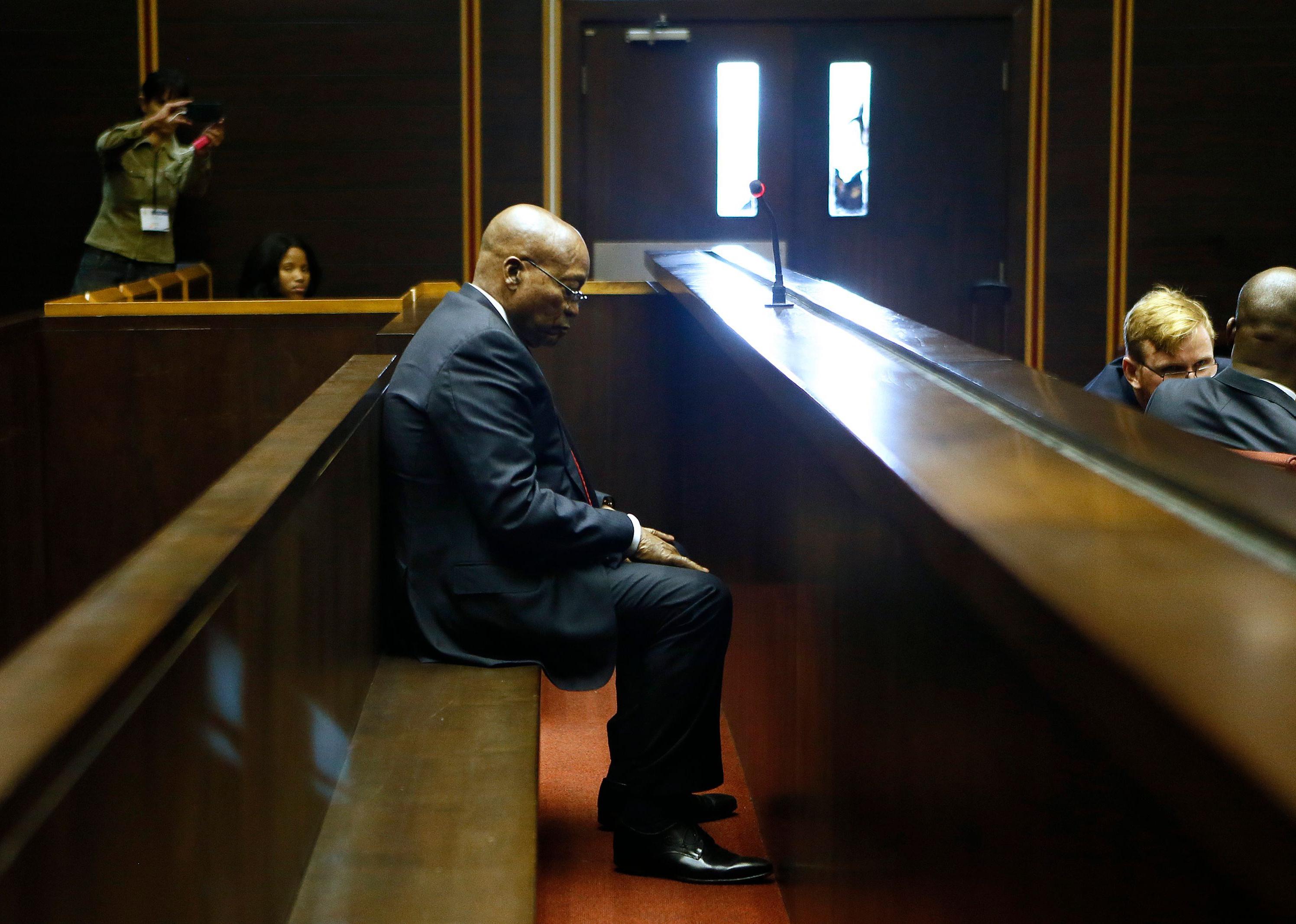
Former world leaders who were prosecuted after leaving office
Sep 14, 2022 | 9:05 PM