Daytona Beach, FL – Volusia Habitat Conservation Plan manager says the county saw the 5th most active sea turtle nesting season in the past 30 years. Ryan Chabot, the Habitat Conservation Plan (HCP) manager, says 740 sea turtle nests were deposited on County-managed beaches this year. While it didn’t beat out last year’s number of 902, Chabot said it’s the 5th highest season since 1988. “Definitely well above our average of about 500 nests a year,” said Chabot to News Daytona Beach. “It coincides with a really high 2020 season and a really high 2019 season.” “We’ve had a few successful seasons the past few years,” added Chabot. Out of that total, 698 of the nests were deposited by loggerhead turtles—the species commonly found on Volusia beaches—77 by green turtles, four by leatherbacks, and one by a Kemp’s Ridley turtle. From these nests, over 55,000 hatchlings were produced, with five nests still remaining on the beaches. Also this season, Chabot says the county has seen 35 sea turtle nest disorientation events, which is when a nest hatches and the hatchlings become confused by bright artificial lighting in the vicinity of a nest; such as that of a flashlight or porchlight. Chabot says the county has a list of ways homeowners on the beachside can prevent sea turtle disorientation. The time between August 1 and November 30 is also known as “washback season,” which is when washbacks—turtles that get washed back to the shore—are typically found during high tides. When someone encounters a washbacked turtle, the first instinct is usually to put the turtle back in the surf. However, the county encourages people to refrain from putting turtles back in the ocean, as they are likely exhausted and dehydrated and can’t make it back offshore on their own. Instead, beachgoers are asked to call Volusia County Beach Safety. So far, the Marine Science Center—who rehabilitates injured or sick sea turtles—has taken in 21 washback sea turtles this season, which is lower on average than a typical year, according to Chabot. This is likely due to our relatively quiet tropical storm season. Want to learn more about Volusia County’s sea turtles? Visit the county’s website for more information.
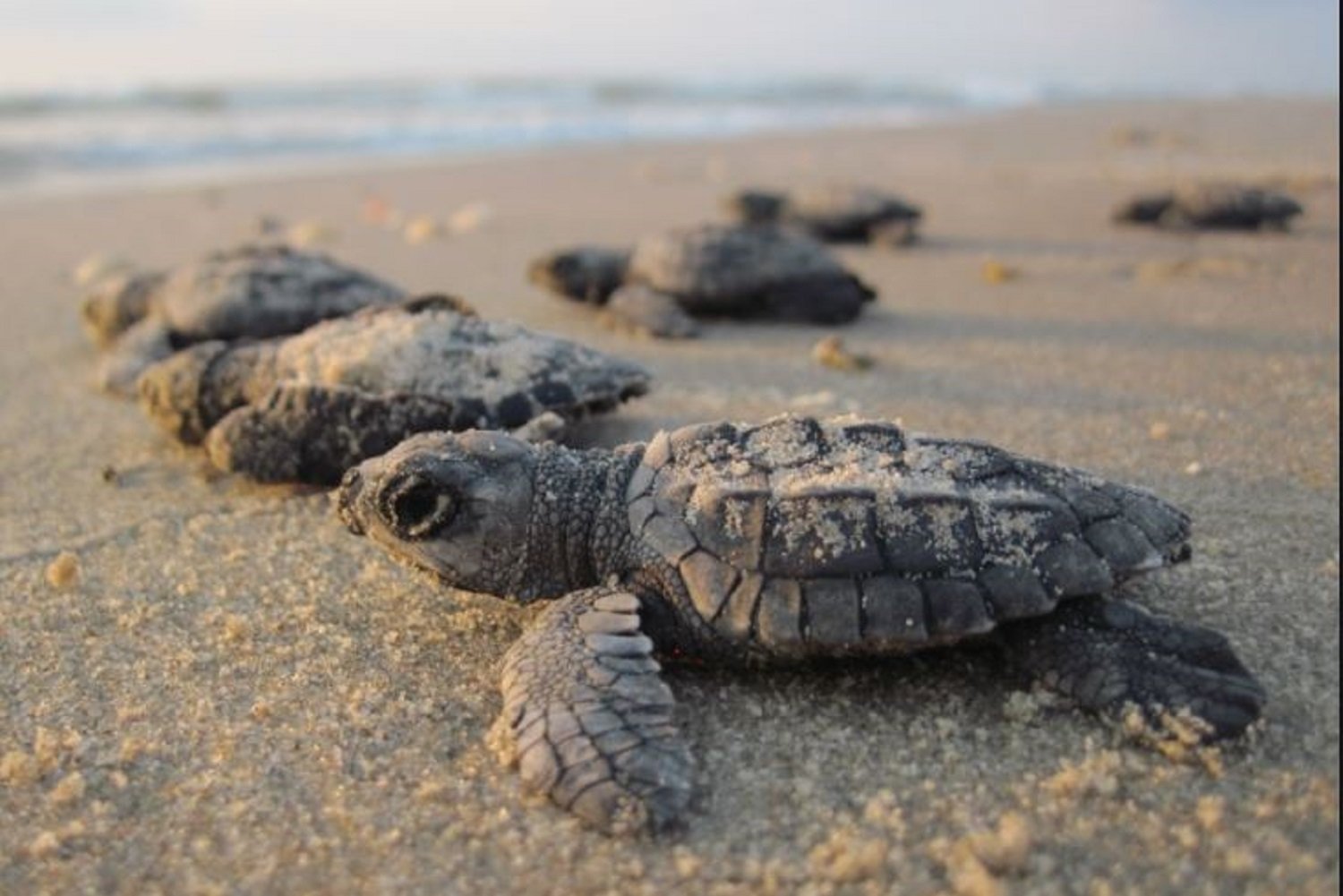
Over 55,000 Hatchlings Produced During Sea Turtle Nesting Season
Nov 9, 2021 | 1:12 PM