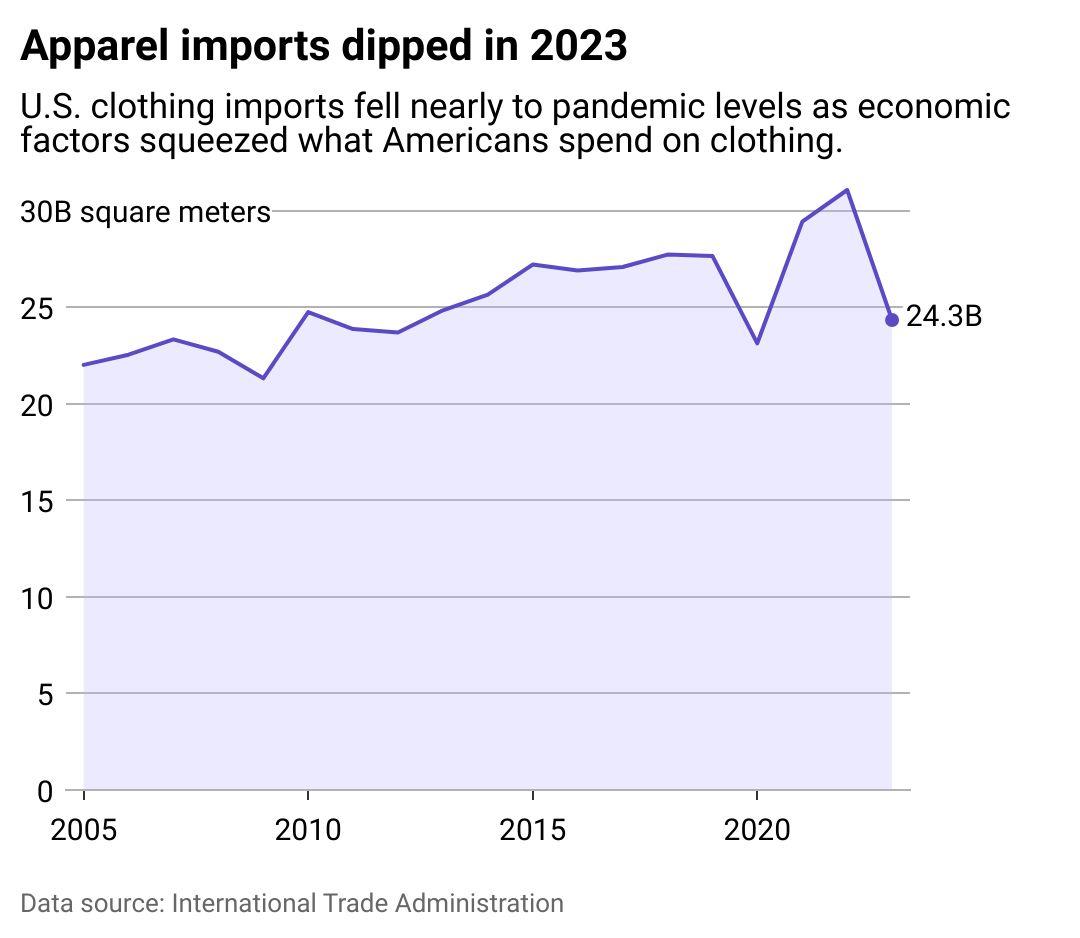
Photo illustration by Elizabeth Ciano // Stacker // Getty Images It’s no secret that fast fashion imports from international brands like H&M, Zara, and Shein have come to dominate Americans’ wardrobes. The U.S. imported more than $24 billion of apparel in 2023, and consumer demand shows no sign of slowing. Fast fashion came to prominence in the early 1990s, though the concept had been around since the ’70s. Until about half a century ago, most Americans purchased textiles and clothing made in the U.S. of A. Since the Industrial Revolution, Americans enjoyed wide availability of mass-produced textiles, but only during two cycles: Spring/Summer and Fall/Winter, the traditional seasons for new fashion releases. Later, as trade relations warmed between China and America in the 1970s, demand skyrocketed for luxurious Chinese clothes such as embroidered silks. Combined with the relatively new technology of containerized shipping, which allowed companies to ship massive quantities at low costs, savvy business owners became wise to a new possibility: importing garments made cheaply in other countries and selling them at a profit. But it wasn’t until the early ’90s, when Zara’s first brick-and-mortar store in the U.S. took off, that fast fashion gained ground. The fast-fashion business model depends on cheap, rapid cycles of production that allow retailers to push out batches of clothing while styles are still at the peak of popularity. This means consumers can snap up garments inspired by the hottest runway trends–known as “dupes”–for a small fraction of the couture price. Over the next decades, as more international brands came stateside and e-commerce took off, clothing production was further expedited, making fast fashion even faster. Today, it’s hard to avoid buying clothing manufactured outside the U.S.–the days of waiting for seasonal clothing collections are long gone. Brands like Zara and Forever 21 now produce an estimated 52 micro-seasons every year. Social media has continued to speed up trend cycles, increasing demand for the latest and greatest looks. However, the accessibility of fast fashion comes at a cost. The RealReal analyzed data from the International Trade Administration to explore how clothing imports have shifted over the past 20 years–and what it means for both people and the planet. The data shows imports in terms of both U.S. dollars and quantity, focusing specifically on clothing instead of accessories and shoes. Quantity values are in square meter equivalents and do not represent individual items imported into the U.S. The growth of fast fashion fueled environmental issues Photo illustration by Elizabeth Ciano // Stacker // Getty Images Fast fashion’s meteoric rise is apparent in retail giants like Shein and Uniqlo, which both saw more than 20% revenue growth between 2022 and 2023 alone. But, as the industry grows, the human and environmental toll has also increased. Many fast-fashion companies boost profit margins by shaving labor costs and upholding inhumane standards. A 2024 report from Public Eye, a Swiss consumer awareness group, found that employees in Shein factories averaged 75-hour workweeks. Furthermore, these grueling labor practices sometimes lead to deadly consequences. In 2012, more than 100 workers died in the Dhaka, Bangladesh, garment factory fire due to a lack of appropriate health and safety measures, including emergency exits. Between carbon emissions and excess waste, the industry also wreaks havoc on the environment. In 2018 alone, more than 11 million tons of textile waste ended up in landfills. The “throwaway culture” around fast-fashion garments means they often end up in the trash after the trend goes out of style. Rampant environmental racism also means clothing waste and other forms of pollution disproportionately impact individuals from Black and Hispanic communities–something advocates have been raising the flag about for decades. Fast fashion also accounts for a whopping 10% of annual emissions globally, according to a March 2023 report from the United Nations Environment Programme. That’s more than the aviation and shipping industries combined. Asia is home to leading apparel producers
A history of fast fashion: ethical issues, high demand, and outsized influence on the US clothing market
Oct 21, 2024 | 3:00 PM