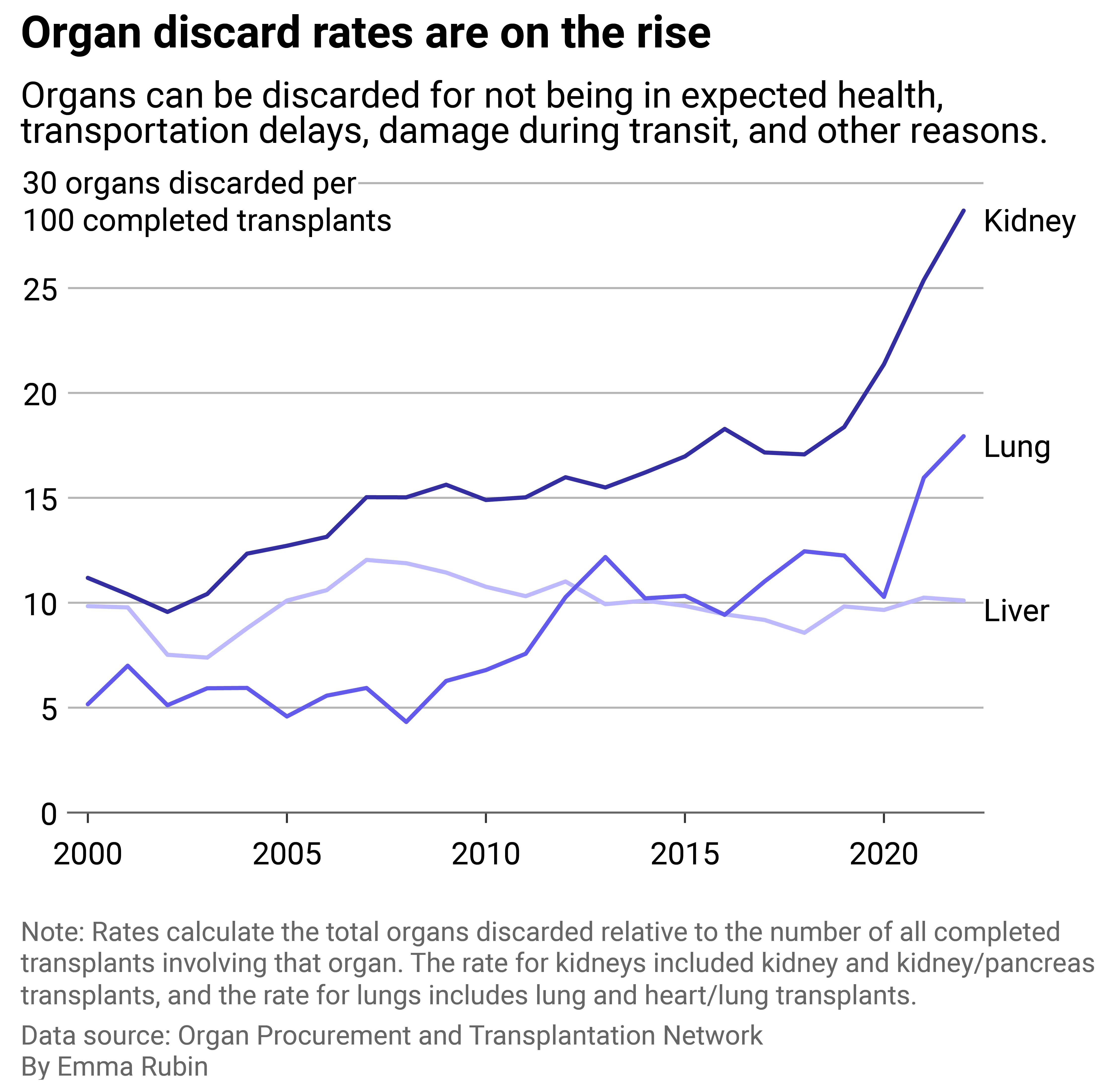
David Tadevosian // Shutterstock Few things are as precious as a heart existing outside the body, in transit to another person who desperately awaits it. Meanwhile, the disparity between the number of heart donors and the number of heart transplants is growing–and this disparity extends to other facets of organ donation. Medical teams performed more than 42,800 organ transplants in the U.S. in 2022, an increase of nearly 1,500 over the previous year. Yet, according to the nonprofit Bridgespan Group, 28,000 organs could be saved yearly if not for the current transplant system breakdowns. Approximately 170 million people are registered organ donors, but each day an estimated 17 people in need of a transplant die waiting for a suitable organ. In cases where donors are deceased, which represents the majority of organ donations, the cause of death significantly impacts a donor’s eligibility. In fact, only 3 in 1,000 deceased candidates can donate, which makes a large supply of potential donors essential. Citing data from the Organ Procurement and Transplantation Network, Northwell Health partnered with Stacker to raise awareness concerning the organ donor shortage in the U.S. and explore what’s contributing to the gap between the number of available organs for transplant and the patients awaiting life-saving surgeries. As a medical industry sector working to sustain patient lives, organ transplant has, of late, come under intense scrutiny. In August 2022, a Senate Finance Committee investigation cited a lack of oversight from the OPTN, leading to wasted organs, mistakes during screening processes, testing errors, blood type mix-ups, and other mistakes that led to 70 deaths and a further 249 patients contracting diseases. To address these concerns and better serve patients in need of life-giving support, the Health Resources and Services Administration announced its “Modernization Initiative” in March 2023. The initiative emphasizes competition, transparency, and accountability to combat inefficiencies in the current transplant system. On the heels of the HRSA’s announcement, the Senate Finance Committee announced bipartisan legislation to break up the monopoly contract held by the United Network for Organ Sharing, giving the HRSA authority to overhaul the organ transplant system and open up OPTN contracting. Read on to learn more about the gap between available organs and the patients waiting for them. Kidneys have the biggest shortfall between the waiting list and organs available
The US offers more organ-donor surgeries than ever, but more work is needed to improve organ transplants
Sep 14, 2023 | 4:10 PM